
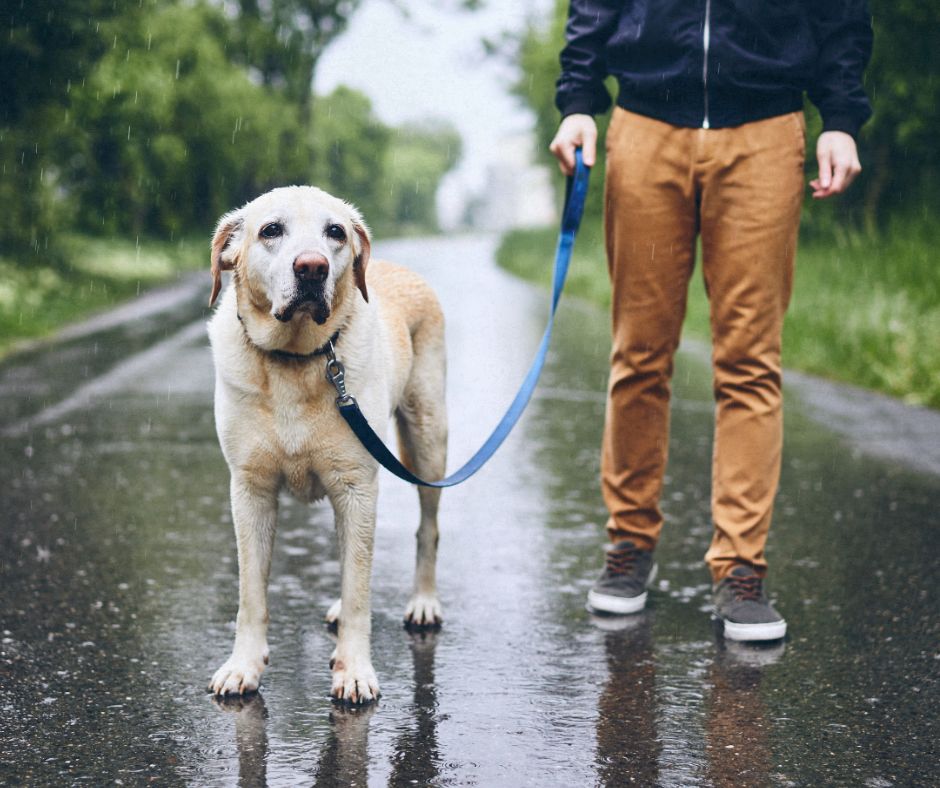
Bad weather has a way of disrupting routines, for us and our dogs. Rain, heat, cold, or smoke can quickly turn long walks and outdoor adventures into a no-go. But here’s the good news: your dog’s needs don’t disappear just because the weather changes, and meeting those needs doesn’t require a big yard or perfect conditions.
This is where intention matters more than environment.
When we talk about fulfillment, we’re talking about mental engagement, physical movement, and emotional regulation. You can absolutely meet all three indoors with the right approach.
Indoor Leash Work: Small Space, Big Payoff
Leash work isn’t just for sidewalks and trails. Even in a small home, walking purposeful patterns—circles, figure eights, pivots around furniture—creates powerful mental work. Your dog has to track your body language, feel leash guidance, and stay tuned into the conversation you’re leading.
That focus is tiring in the best way.
Twenty minutes of intentional indoor leash work can easily add up to roughly ⅓ of a mile, meeting a meaningful portion of your dog’s physical needs while sharpening engagement and impulse control. This is especially helpful for anxious, reactive, or high-drive dogs who benefit from structure over chaos.
Puzzle Feeders & Problem Solving
Feeding doesn’t have to be passive. Puzzle feeders, scatter feeding, or slow feeders turn meals into enrichment. Problem solving taps into your dog’s brain and helps reduce restlessness and frustration—two things that tend to spike when dogs are under-stimulated.
A mentally worked dog is far more likely to settle.
Tug With Purpose
A structured game of tug can be incredibly fulfilling when done correctly. When we incorporate elements of the predation sequence—engage, chase, grip, release—we help release healthy endorphins. The key is clear rules: start on your cue, end on your cue, and include obedience moments like sit, down, or out. This leads to a calm after play, not overstimulation.
Place: Giving the Nervous System a Job
When dogs are wandering, pacing, or pestering, it’s often because they lack direction. Place gives them a clear job: be still, settle, rest. This isn’t punishment—it’s regulation. Place work teaches dogs how to turn off and relax, something many struggle to do on their own.
Inclement weather doesn’t have to mean unmet needs or pent-up energy. With structure, creativity, and leadership, you can turn any day into a productive one for your dog.
And if you’re feeling stuck or unsure how to implement this effectively, that’s where guided training can make all the difference. Sometimes a small adjustment in how you’re working your dog indoors can unlock big changes in behavior—and harmony—in everyday life.